




PLEASE NOTE – The information contained within this webpage is intended for medical professionals only. Non-medical professionals should not read further.
Additionally, the information contained within this page is intended for educational purposes and as a quick reference for medical professionals. All information contained within should be double-checked against advice boards such as MHRA, NICE, and the NHS. All indications and access may change.
Finally, nothing on this page has been written with the intent of advertisement. Wegovy® is a Prescription Only Medicine (POM) product and its misuse can be very dangerous.
What is Wegovy? Introduction and Context

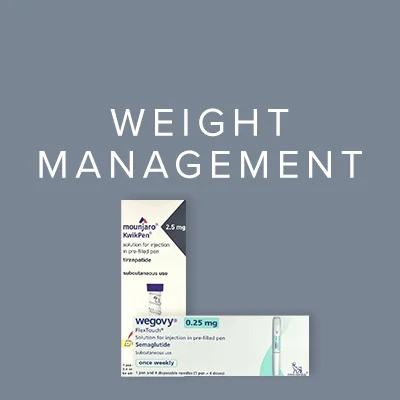
Wegovy is a prescription-only weight management drug formulated using Semaglutide, an ingredient in diabetes treatments and analogue for the body’s natural glucagon-like peptide-1 (GLP-1). This means Semaglutide can help stabilise blood sugar levels and encourage a feeling of fullness. The formulation of Wegovy is, in the words of the UK Government, “licensed for weight loss/management alongside a reduced calorie diet and exercise in people with obesity, or people who are overweight with weight-related health problems”.
Put succinctly, Wegovy is a drug which is often used to help people supplement their weight loss plans under the purview of a registered prescriber. As a tool, Wegovy helps to suppress appetite and discourage overeating, which can lead to numerous health benefits for patients, as well as increased body confidence. In terms of administration, Wegovy is also simple to deliver. Each dose of Wegovy comes in a pre-dosed injection pen or safety syringe, and should be administered weekly. The simplicity of its administration has helped this weight management drug to see its recent widespread distribution and use.
What is Wegovy / Semaglutide? Mechanism & Pharmacology
Semaglutide is a GLP-1 receptor agonist. This means that it mimics the effects of endogenous GLP-1, which include reduced appetite, lowering the rate of gastric emptying and satiety. Semaglutide simulates the insulin production which is typically meal-dependent in pancreatic beta cells, lowering blood sugar. Glucagon, a hormone which raises blood sugar, is also suppressed. Finally, the movement of food away from the stomach is slowed, which creates a sensation of fullness and reduces food intake. Ultimately Wegovy, when used in the context of a weight loss plan, helps patients to feel fuller for longer, decrease their blood sugar, and decrease general appetite.
However, it should be noted that the efficacy of Wegovy may vary from patient to patient depending on their medical history and weight loss plan; there is no single drug which can help patients lose weight in a quick and safe manner on its own. Additionally, Wegovy can increase the risk of developing thyroid cancers. Patients will only be prescribed Wegovy alongside a reduced-calorie diet and physical activity plans.
Indications, Eligibility & UK Regulatory Status
Semaglutide was approved for use under the NHS in 2023 for the purpose of helping patients lose weight alongside a reduced calorie diet and exercise. Since then, private practices and clinics have been looking for the indications, eligibility, and regulatory guidelines regarding prescribing this medicine to their patients.
We’ll provide a brief breakdown and list of guidance in this blogpost. For official guidelines and advice, please see the following links:
NICE - TA875 guideline for semaglutide in weight management
MHRA Products | Search results
NICE GUIDELINES -
Semaglutide may be recommended to assist with weight management, including weight loss and weight maintenance alongside a reduced-calorie diet and increased physical activity. However, this recommendation will only be given if -
Semaglutide is used for two years at most. No course should administer semaglutide for more than two years. Additionally, this medicine should only be administered under the purview of a multidisciplined specialised weight management service which provides multidisciplinary management of overweight or obese adults.
The patient has at least one weight-related comorbiditiy.
The patient has a body mass index (BMI) of at least 35.0 kg/m2, or a BMI of 30.0 kg/m2 to 34.9 kg/m2 and meet the criteria for referral to specialist overweight and obesity management services.
However, Semaglutide may also be prescribed by companies, so long as they follow the Commercial Arrangement.
Finally, when using Semaglutide for people who are South Asian, Chinese, Other Asian, Middle Eastern, Black African Or African Caribbean, use lower BMI thresholds (usually reduced by 2.5 kg/m2).
Semaglutide should be evaluated or stopped if less than 5% of the initial weight has been lost after 6 months of treatment.
Other links:
NHS / private access in UK (Health Media); dose thresholds, BMI criteria, stopping rules (Pan Mersey APC)
Clinical Evidence & Effectiveness
There have been several key trials to support the efficacy of Semaglutide
New England Journal of Medicine: Tirzepatide as Compared with Semaglutide for the Treatment of Obesity.
https://www.nejm.org/doi/full/10.1056/NEJMoa2032183
This study compared Wegovy against Ozempic as a conventional weight-loss drug for adults. We will only be assessing the findings regarding Wegovy’s efficacy.
- 16% of participants on Wegovy lost a quarter of their body weight within 68 weeks.
- Participants on Wegovy lost 13cm from their waistline on average.
- Women tended to benefit more than men from the weight loss drug.
Springer Nature/Nature Medicine: Long-term Weight Loss Effects of Semaglutide in Obesity Without Diabetes in the SELECT Trial
https://www.nature.com/articles/s41591-024-02996-7
This study measured the impacts of Semaglutide on weight and outcomes of changes on the subject's body by baseline body mass index (BMI).
- In patients treated with Semaglutide, weight loss continued over 65 weeks and was sustained for up to 4 years.
- At 208 weeks, Semaglutide was associated with mean reduction in weight (−10.2%), waist circumference (−7.7 cm) and waist-to-height ratio (−6.9%) versus placebo (−1.5%, −1.3 cm and −1.0%, respectively; P < 0.0001 for all comparisons versus placebo).
- Impactful weight loss occurred in all subjects, regardless of sex, race, body sizes, or region.
New England Journal of Medicine: Once-Weekly Semaglutide in Adults with Overweight or Obesity
https://www.nejm.org/doi/full/10.1056/NEJMoa2307563
This study looked to measure the impact of once-weekly administration of Semaglutide in adults who were overweight or obese.
- The group saw a mean change in body weight from their baseline levels. By week 68 there was a reduction of 14.9% in Semaglutide users, while the placebo group only lost 2.4%.
- Participants who received Semaglutide had a greater improvement with respect to cardiometabolic risk factors and a greater increase in participant-reported physical functioning from baseline than those who received placebo.
- Common side effects in the Semaglutide user group were nausea and diarrhoea.
Safety Profile, Side Effects & Monitoring
While Wegovy is effective, it does have notable side effects. Commonly, those who take Wwegovy or a Semaglutide product have to deal with potential gastro-intestinal side effects, including nausea and headaches. Additionally, Semaglutide comes with an increased risk of thyroid cancers, pancreatitis and gallbladder issues.
Side effects: The most common side effects for Wegovy/Semaglutide are nausea, vomiting, diarrhoea, constipation, fatigue and headaches. Other side effects include acid reflux, trapped wind or flatulence, and skin reactions. Gallstone development is another side effect.
Can Wegovy cause hair loss?
A side effect which some patients attribute to Wegovy can be hair shedding; however, so far there is no evidence proving that Wegovy directly causes hair loss.
Serious side effects:
- Complications of the diabetic eye disease diabetic retinopathy. Always inform your doctor if you have changes in vision on Wegovy.
- Acute pancreatitis or inflamed pancreas, this can cause severe pain in your stomach which can last for a long time. This pain may move to your back, and requires you to see a doctor immediately.
- Kidney or bladder stones. This may manifest in lower abdomen or back pain, difficulty urinating, or a change in urine colour.
- Severe allergic reactions (including anaphylactic reactions, angioedema). Seek immediate medical help and inform your doctor immediately if you develop symptoms such as breathing problems, swelling of face, lips, tongue, and/or throat with difficulty swallowing, wheezing, fast heartbeat, pale and cold skin, feeling dizzy or weak.
- Hip fractures.
- Bowel obstruction. A severe form of constipation with additional symptoms.
In Conclusion
One thing that should be stressed is that Wegovy is not an end-all solution. Successful use of Wegovy needs to fit within an inter-disciplinary framework of diet and exercise overseen by medical professionals.