




PLEASE NOTE – The information contained within this webpage is intended for medical professionals only. Non-medical professionals should not read further.
Additionally, the information contained within this page is intended for educational purposes and as a quick reference for medical professionals. All information contained within should be double-checked against advice boards such as MHRA, NICE, and the NHS. All indications and access may change.
Finally, nothing on this page has been written with the intent of advertisement. Both Wegovy® and Mounjaro® are Prescription Only Medicine (POM) products and their misuse can be dangerous.
The health impact of obesity has been significant. Obesity is a condition where a patient has excess body fat, the most common indicator of which is that your BMI (Body Mass Index) exceeds 27.5. Once someone is obese, their risk of type 2 diabetes, coronary heart conditions, cancers and strokes increase significantly. If we take a look at the issue of obesity with a wider lens, beyond the immediate effects on a patient, high levels of obesity within the population puts a significant strain on the health service.
At time of writing, the NHS estimates that roughly one in four adults and one in five children suffers from obesity. Meaning a quarter of the adult population has an increased risk of severe illness as a result of obesity.
To help patients lose weight safely, effectively, and quickly, weight loss medicines have been integrated into many treatment plans alongside reduced-calorie diets and physical exercise. Weight-loss medicines can help to reduce hunger, increase satiety, help patients stick to strict eating restrictions, encouraging them to lose weight in a significant, steady manner.
Among the weight loss drugs being used by patients across the UK, two brands stand out for their popular use, these being Mounjaro and Wegovy. Their approval by NICE, and the steadily-developing body of evidence to prove and compare their efficacy helps to present these two as potential forerunners for a new era of effective weight management medications. However, how do these two brands compare in terms of potency, method of action, and safety? This article looks to examine some of the differences between Wegovy and Mounjaro, providing summarised information from accredited sources.

Mechanisms & Methods of Action
Wegovy and Mounjaro both have different methods of action in how they suppress appetite and help to encourage weight loss. We’ll be taking some time to assess these differences and how they might impact patients.
How Does Wegovy Work?
Wegovy utilises the active ingredient, Semaglutide, to help encourage weight loss. Semaglutide is a GLP-1 receptor agonist which mimics the effects of naturally-occurring GLP-1. These effects may include reduced appetite, lowering the rate of gastric emptying, and heightening satiety.
Semaglutide also lowers blood sugar by simulating insulin production which is typically meal-dependent in pancreatic beta cells, lowering glucagon production, and decreasing gastric emptying. This reduction in gastric emptying creates a sensation of fullness and encourages the patient to decrease their food intake when they might otherwise feel hungry.
How Does Mounjaro Work?
Mounjaro, the market name for Tirzepatide, is a dual agonist which also mimics hormones within the body; GLP-1 and GIP to be precise. This leads to higher levels of insulin, lower blood sugars, and slower gastric emptying, which in turn leads to a sensation of fullness and satiety for longer.
This decrease in appetite, and improvement in blood sugar levels helps to decrease appetite, and allows patients to lose weight quicker.
In studies which have compared the two weight loss medicines, Mounjaro test groups tended to lose more weight. However, the exact difference in efficacy between the two is still being studied.
Regulatory status, indications & eligibility in the UK
Mounjaro was approved by NICE for chronic weight management in November 2023, closely following Wegovy, which released in September 2023. Alongside their approvals for use in managing weight loss, guidance was issued by NICE on their use.
NICE Guidance on Semaglutide:
Semaglutide may be recommended to assist with weight management, including weight loss and weight maintenance alongside a reduced-calorie diet and increased physical activity. However, this recommendation will only be given if -
Semaglutide is used for two years at most. No course should administer semaglutide for more than two years. Additionally, this medicine should only be administered under the purview of a specialised weight management service which provides multidisciplinary management of overweight or obese adults.
The patient has at least one weight-related comorbidity.
The patient has a body mass index (BMI) of at least 35.0 kg/m2, or a BMI of 30.0 kg/m2 to 34.9 kg/m2 and meet the criteria for referral to specialist overweight and obesity management services.
However, Semaglutide may also be prescribed by companies, so long as they follow the Commercial Arrangement.
Finally, when using Semaglutide for people who are South Asian, Chinese, Other Asian, Middle Eastern, Black African Or African Caribbean, use lower BMI thresholds (usually reduced by 2.5 kg/m2)
Semaglutide should be evaluated or stopped if less than 5% of the initial weight has been lost after 6 months of treatment.
NICE page on Semaglutide (Wegovy)
NICE guidance on using Mounjaro:
According to NHS Interim Comissioning Guidance, an NHS patient's eligibility for Tirzepatide will depend on if your BMI 40 kg/m2 or more, and if you have at least four of the following weight-related health conditions:
- High blood pressure.
- Dyslipidaemia (abnormal blood fats).
- Obstructive sleep apnoea.
- Cardiovascular disease (for example, heart disease).
- Type 2 diabetes.
As of July 2026, the BMI eligibility will fall to the following range: 35 kg/m2 and 39.9 kg/m2.
For non-NHS patients, NICE guidance states the following:
Tirzepatide is only recommended as an option for managing overweight and obesity when used alongside a reduced-calorie diet and increased physical activity plan for adults. Additionally, the following conditions need to be met:
- The patient must have an initial body mass index (BMI) of at least 35 kg/m2
- At least one single 1 weight-related comorbidity
- The company who provides Tirzepatide follows the commercial arrangement.
Additionally, when administering Tirzepatide, it is recommended that you utilise a lower BMI threshold (usually reduced by 2.5 kg/m2) for people from South Asian, Chinese, other Asian, Middle Eastern, Black African or African-Caribbean ethnic backgrounds.
Finally, if the patient has lost less than 5% of their initial weight after 6 months on their highest tolerated dose, it should be considered and decided whether the patient should continue their treatment. These considerations should take into account the benefits and risks of treatment for the patient.
NICE page on Tirzepatide (Mounjaro)
Does Wegovy (Semaglutide) Prevent Heart Conditions?
The MHRA have approved utilising Semaglutide to help prevent cardiovascular diseases (CVD) such as cardiovascular death, non-fatal heart attack, and non-fatal stroke. This is following a recent study performed by the New England Journal of Medicine. This study indicated that the use of Wegovy helped to decrease the risk of Major Cardiovascular events by 20%.
Efficacy Evidence: What the Trials Show
In this section, we'll list some of the most impactful studies regarding Mounjaro and Wegovy, as well as important context regarding these studies.
Once-Weekly Semaglutide in Adults with Overweight or Obesity
- This was a 2021 study on Semaglutide, a double-blind trial of 1961 adults where adults were assigned in a 2:1 ratio a weekly subcutaneous injection of Semaglutide. This study demonstrated strong results in favour of Semaglutide, with a mean weight loss of 14.9% for participants who took Semaglutide over 68 weeks. The placebo group, by comparison, lost 2.4% of their body weight across the same period and while following the same lifestyle intervention plan (i.e. reduced calorie diets, exercise).
Tirzepatide Once Weekly for the Treatment of Obesity | New England Journal of Medicine
- This was a 2022 study on Tirzepatide, a phase-3, double-blind, randomised, control trial of 2539 adults. In this study, the group who were taking Tirzepatide achieved a loss of −15.0% of their mean body weight after 72 weeks. Comparatively, the placebo group lost −3.1% under the same conditions.
- This was a 2025 direct/indirect comparison of Semaglutide and Tirzepatide in overweight or obese adults.
- The group saw a mean change in body weight from their baseline levels. By week 68 there was a reduction of 14.9% in semaglutide users, 20.2% in Tirzepatide users, while the placebo group only lost 2.4% of their body weight on the same weight loss plan..
- Participants who received Semaglutide had a greater improvement with respect to cardiometabolic risk factors and a greater increase in participant-reported physical functioning from baseline than those who received placebo.
- Common side effects in both user groups were gastrointestinal, providing mild-to-moderate GI issues, often occurring when doses were escalated.
In short, studies demonstrate the efficacy of both weight loss drugs when utilised alongside a weight loss regime which includes a reduced-calorie diet and an increased physical activity plan.
Safety Profiles & Monitoring
The safety of patients, as always, is the top priority when administering weight loss medications. This section looks to cover what a patient should know before taking Mounjaro or Wegovy, including the list of potential side effects.
What to Know About Mounjaro
Mounjaro or Mounjaro KwikPen should not be used if the patient is allergic to Tirzepatide or other Mounjaro ingredients.
Mounjaro should be discussed with a doctor, pharmacist, or nurse. Here are some of the discussion topics which may need to be had regarding treatment.
- Does the patient suffer from severe problems with food digestion or gastric emptying? This includes if the patient has problems with food remaining in the stomach for longer than it should do (e.g. in the instance of severe gastroparesis).
- If the patient has ever had pancreatitis, or an inflamed pancreas.
- If the patient has any ocular issues, problems with their eyes which may or may not be related to diabetic retinopathy or macular oedema.
- If the patient is using a sulphonylurea or insulin for diabetes, the combination of Mounjaro with either of these medicines can cause hypoglycaemia. Your doctor may need to change your dose of these other medicines to reduce this risk.
- As treatment begins, patients might experience a loss of fluids or dehydration due to vomiting, nausea, diarrhoea, or other means. This loss of fluids may lead to a decrease in kidney function. In instances such as this, it is important for patients to avoid dehydration by drinking plenty of fluids.
- Patients should tell their doctors or surgeon if they are taking Mounjaro before any procedure or surgery.
- Mounjaro should not be administered or given to children, or adolescents under 18; this medicine has not been studied in this age group.
- If your patient is using other medicines, or might have recently used other medicines, they should share this information.
- Mounjaro should not be used during pregnancy, we do not know the effect it may have on an unborn or developing child. It is recommended to always use contraception while on Mounjaro. Additionally, women who are obese or overweight and using oral contraceptives should consider using an additional barrier method of contraception.
- Patients who are breast-feeding should talk to their doctors before using Mounjaro.
- Patients who drive or operate machines should be able to do so unimpeded by Mounjaro. However, if the patient uses Mounjaro with other diabetic medicines, such as a sulphonylurea or insulin, they may suffer from low blood sugar or hypoglycaemia. Patients should avoid driving or using machines if they get any signs of low blood sugar, e.g. headache, drowsiness, weakness, dizziness, feeling hungry, confusion, irritability, fast heartbeat and sweating.
What to Know About Wegovy
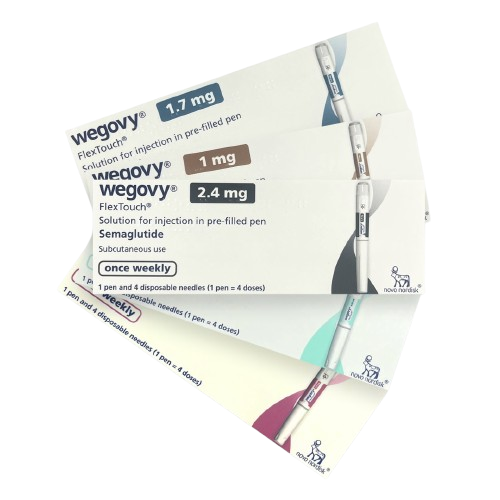
Wegovy should not be used if the patient is allergic to Semaglutide or any other ingredients contained within the medicine.
Patients should always talk to their doctors regarding Wegovy before starting treatment. Wegovy should be discussed with a doctor, pharmacist, or nurse. Here are some of the discussion topics which may need to be had regarding treatment.
- During treatment with Wegovy, patients may feel sick or nauseous, they may be sick (vomiting) or develop diarrhoea. These side effects may lead to an eventual loss of fluids and dehydration. In instances such as these, it is vital that patients drink enough fluids to prevent dehydration. This is especially important if you your patient has kidney problems, or a history of kidney issues.
- Patients may develop an inflamed pancreas (or acute pancreatitis). If they develop severe or ongoing pain in the stomach area, they are to see a doctor immediately.
- It should be made clear to diabetes patients that Wegovy is not a substitute for insulin.
- Wegovy can also cause low blood sugar in patients. It is vital that patients know the warning signs for low blood sugar levels.
- Patients should not take Wegovy alongside a sulfonylurea or an insulin, or it may cause hypoglycaemia. You may need your patient to test their blood sugar levels if they are diabetic and considering Wegovy.
- A quick and sudden change in blood sugar controls might lead to a short-term worsening in retinopathy symptoms, an eye disease which affects people with diabetes. Make sure that your patient understands that if they suffer from eye problems, they need to speak to their doctor.
- Wegovy should not be used by children or anyone below the age of 12. Additionally, Wegovy is not suitable for use by those who are pregnant, or people who are breast feeding.
- You should know if your patient is taking any other medication alongside Wegovy.
- While using Wegovy, it is recommended that patients use contraception throughout the course of their treatment.
- Some patients may feel dizzy after taking Wegovy, patients suffering from dizziness should be discouraged from driving or operating heavy machinery.
Potential Mounjaro Side Effects
The listed side effects provided have been taken and listed from product information leaflets from Mounjaro. As these may be out of date, please always check supplier—provided product information leaflets, as well as other reputable sources for an extensive list of potential side effects.
Serious side effects
Uncommon (may affect up to 1 in 100 people)
- Inflamed pancreas (acute pancreatitis) which could cause severe pain in the stomach and back which does not go away. You should see a doctor immediately if you experience such symptoms.
Stop using this medicine and seek urgent medical help if you experience severe, persistent pain in the stomach area (abdomen), with or without nausea and vomiting. This could be a sign of acute pancreatitis, which is serious and potentially life-threatening.
Rare (may affect up to 1 in 1000 people)
- Severe allergic reactions (e.g. anaphylactic reaction, angioedema) - you should get immediate medical help and inform your doctor if you experience symptoms such as breathing problems, rapid swelling of the lips, tongue and/or throat with difficulty swallowing and a fast heartbeat.
Other Side Effects
Very common (may affect more than 1 in 10 people)
- Low blood sugar (hypoglycaemia) when Tirzepatide is used for the treatment of type 2 diabetes with medicines that contain a sulphonylurea and/or insulin. If you are using a sulphonylurea or insulin, the dose may need to be lowered while you use Tirzepatide.
Symptoms of low blood sugar may include headache, drowsiness, weakness, dizziness, feeling hungry, confusion, irritability, fast heartbeat and sweating. Your doctor should tell you how to treat low blood sugar.
- Feeling sick (nausea)*
- Diarrhoea*
- Being sick (vomiting) – this usually goes away over time*
- Stomach (abdominal) pain*
- Constipation*
*These side effects are usually not severe. They are most common when first starting Tirzepatide but decrease over time in most patients.
- Constipation, abdominal pain, and vomiting are very common in patients treated for weight management, but common in patients treated for type 2 diabetes.
Common (may affect up to 1 in 10 people)
- Dizziness
- Low blood pressure
- Indigestion (dyspepsia), Bloating of the stomach, Gas, or Burping
- Allergic reaction/hypersensitivity (e.g., rash, itching, and eczema)
- Reflux, heartburn or GORD a disease caused by stomach acid rising up into your mouth
- Hair loss
- Fatigue
- Injection site reactions (e.g. itching or redness)
- Fast pulse
- Increased levels of pancreatic enzymes (such as lipase and amylase) in blood
- Increased calcitonin levels in blood
- Gallstones
Uncommon
- Gallbladder infection, or Cholecystitis
- Altered sense of taste
- Pain in the Injection site
- A delay in the emptying of the stomach
- Altered skin sensation
Potential Wegovy Side Effects
The listed side effects provided have been taken and listed from product information leaflets from Wegovy. As these may be out of date, please always check your supplier — provided product information leaflets, as well as other reputable sources for an extensive list of potential side effects.
Serious side effects
Common (may affect up to 1 in 10 people)
- Complications of diabetic eye disease (diabetic retinopathy). If you have diabetes you should inform your doctor if you experience eye problems, such as changes in vision, during treatment with this medicine.
Uncommon (may affect up to 1 in 100 people)
- Kidney/bladder stones. These may be indicated by back or lower abdomen pain, through difficulty in urination or a change in colour of your patient’s urine.
- An inflamed pancreas. Also known as ‘acute pancreatitis’, signs of this may include long-lasting and severe pain in the stomach, which may move to your back. This is a serious symptom, please immediately see your doctor if you experience such symptoms.
Rare (may affect up to 1 in 1000 people)
- Severe allergic reactions (anaphylactic reactions, angioedema). You should seek immediate medical help and inform your doctor straight away if you get symptoms such as breathing problems, swelling of face, lips, tongue, and/or throat with difficulty swallowing, wheezing, fast heartbeat, pale and cold skin, feeling dizzy or weak.
- Hip fractures. Not known (frequency cannot be estimated from the available data).
- Bowel obstruction. A severe form of constipation with additional symptoms such as stomach ache, bloating, vomiting etc.
Other side effects:
Very common (may affect more than 1 in 10 people)
- Headache
- Feeling sick (nausea)
- Being sick (vomiting)
- Diarrhoea
- Constipation
- Stomach pain
- Feeling weak or tired These usually go away over time
Common (may affect up to 1 in 10 people)
- Feeling dizzy
- Upset stomach or indigestion
- Burping
- Gas (flatulence)
- Bloating of the stomach
- Inflamed stomach (‘gastritis’) – the signs include stomach ache, feeling sick (nausea) or being sick (vomiting)
- Reflux or heartburn – also called ‘gastro-oesophageal reflux disease’
- Gallstones
- Hair loss
- Injection site reactions
- Change in the way food or drink tastes
- Change in skin sensation
- Low blood sugar (hypoglycaemia) in patients with diabetes. The warning signs of low blood sugar may come on suddenly. They can include cold sweat, cool pale skin, headache, fast heartbeat, feeling sick (nausea) or very hungry, changes in vision, feeling sleepy or weak, feeling nervous, anxious or confused, difficulty concentrating or shaking. Your doctor will tell you how to treat low blood sugar and what to do if you notice these warning signs. Low blood sugar is more likely to happen if you also take a sulfonylurea or insulin. Your doctor may reduce your dose of these medicines before you start using this medicine.
Uncommon (may affect up to 1 in 100 people)
- Increased levels of bilirubin in your blood - the signs of which include jaundice – a yellowing of the skin or the whites of the eyes.
- A delay in stomach emptying
- Increased heartbeat rate
- Increase of pancreatic enzymes (such as lipase and amylase) shown in blood tests.
- Low blood sugar (hypoglycaemia) in patients without diabetes.
Contraindications and Cautions for Wegovy
The BNF lists the contraindications of Semaglutide (Wegovy) as follows: Diabetic ketoacidosis when used for Type 2 diabetes mellitus.
Contraindications and Cautions for Mounjaro
Hypersensitivity to the active substance or to any excipients listed in the SmPC.
Caution in patients with severe gastrointestinal disease (including severe gastroparesis).
Caution, and appropriate monitoring, in patients with non-proliferative diabetic retinopathy requiring acute therapy, proliferative diabetic retinopathy or diabetic macular oedema.
Mounjaro contains benzyl alcohol (as a preservative), which may cause allergic reactions. Patients with hepatic or renal impairment should be informed of the potential risk of metabolic acidosis due to accumulation over time.
Access and Commissioning
Where can patients access Wegovy?
NHS – Patients can gain access to Wegovy through the NHS if they are referred by their GP (or select other HCP roles) to a specialist weight management service.
PRIVATE – Private access to Wegovy is also permitted, however there are several conditions which need to be met by the patient and the prescriber before they are given access. Firstly, Wegovy cannot be purchased over the counter, and can only be granted following an assessment and prescription. Additionally, this private access requires the patient be supported throughout their weightloss process.
Useful links - Accessing Wegovy for weight loss: Everything you need to know – Department of Health and Social Care Media Centre
Where can patients get Mounjaro?
NHS – Like Wegovy, Mounjaro can only be accessed under the NHS following a referral from their GP to a specialist weight management service. To be referred, a patient needs to meet the following conditions. These conditions do not guarantee a treatment plan with Mounjaro.
[The patient] must be 18.
[The patient] must have a BMI of 40+ or 37.5+ if from a black, Asian or other background.
[The patient] must be diagnosed with four or more weight-related health conditions, such as Type II Diabetes; high blood pressure (hypertension); heart disease; sleep apnoea, or similar conditions.
Read more - Mounjaro (Tirzepatide) Who can get it on the NHS? - Bredon Hill Surgery
PRIVATE - Private access to Mounjaro is permitted, and similar to Wegovy, there are conditions for the patient and the prescriber before access can be provided. Firstly, Wegovy cannot be purchased over the counter, and can only be granted following an assessment and prescription. Additionally, this private access requires the patient be supported throughout their weight loss process.
Decision Support: Choosing Between Mounjaro and Wegovy
- Clinical factors: baseline BMI/comorbidities, prior GLP-1 exposure, tolerability history, CV risk profile.
- Service factors: availability (specialist vs primary care access), duration rules, formulary status.
- Patient factors: preference, adherence likelihood, counselling needs.
- Shared decision table: side-by-side eligibility, efficacy range, dosing, duration rules, setting, monitoring, key pros/cons with citations.
Some Considerations Regarding Mounjaro and Wegovy -
Non-Promotional – All information you provide regarding Mounjaro or Wegovy should be informational and non-promotional. This includes emphasising the role of these drugs as a part of a weight loss regime.
Off-label Cautions – Do not ever administer or take off-label Wegovy or Mounjaro.
Informed Consent – Your patient should have informed consent before taking any medication. Please follow NHS guidance on informed consent.
Expectation Setting – As part of informed consent, patients should have their expectations from either Wegovy or Mounjaro managed.
Conclusion
Wegovy and Mounjaro both have different benefits and contraindications. Thankfully, through communication with their HCP and specialised weight loss service, patients who are looking to lose weight for health reasons are able to benefit from these drugs alongside a bespoke weight loss regime.
FAQs
Do Wegovy and Mounjaro Cause Hair Loss?
Hair loss is listed as a potential side effect for both Wegovy and Mounjaro. This risk should be communicated with the patient before prescribing.
How do I prevent hair loss on Mounjaro or Wegovy?
Hair loss may not be entirely preventable or mitigated while on either of these medicines. However, the hair lost while on Mounjaro or Wegovy may be a result of stress, or very rapid weight loss. To prevent hair loss while on these drugs, try to maintain a diet that is rich in nutrients, try to lose weight evenly, rather than suddenly, and try to manage your stress.
Can I increase the Mounjaro Dosage I give to a patient?
Patients often need to be started on a lower dosage (roughly 2.5mg) for a few weeks (typically four weeks) before slowly upping their dosage incrementally to the patient’s maximum maintenance dose.
How to know if a patient’s Mounjaro Dose is enough?
If a patient’s weight loss is beginning to plateau before their anticipated result, it may be worth considering increasing their dose. Additionally, if a patient experiences consistent hunger, cravings, or simply has lost very little weight despite following their weight loss regime, they may potentially benefit if their dose was increased.
How do I inject Mounjaro?
Mounjaro is self-administered weekly in doses ranging between 2.5-15mg. Using a pre-dosed injection pen, patients administer Mounjaro by injecting themselves in their upper thigh, or abdomen. Patients may also be injected in the upper arm if they are assisted.
Please note – patients should always keep at least a finger width between their last injection site and their new injection site. Injection sites should be rotated weekly. Injections should never be less than 5cm away from the belly button.
How do I inject Wegovy?
Like Mounjaro, Wegovy is self-administered every week with a pre-dosed injection pen. Doses often start at 0.25 mg and increase monthly until a dose of 1.7 mg or 2.4 mg is reached. Wegovy is injected in the upper arms, stomach or upper thigh, always at least two inches away from the navel and never in the same spot twice.